
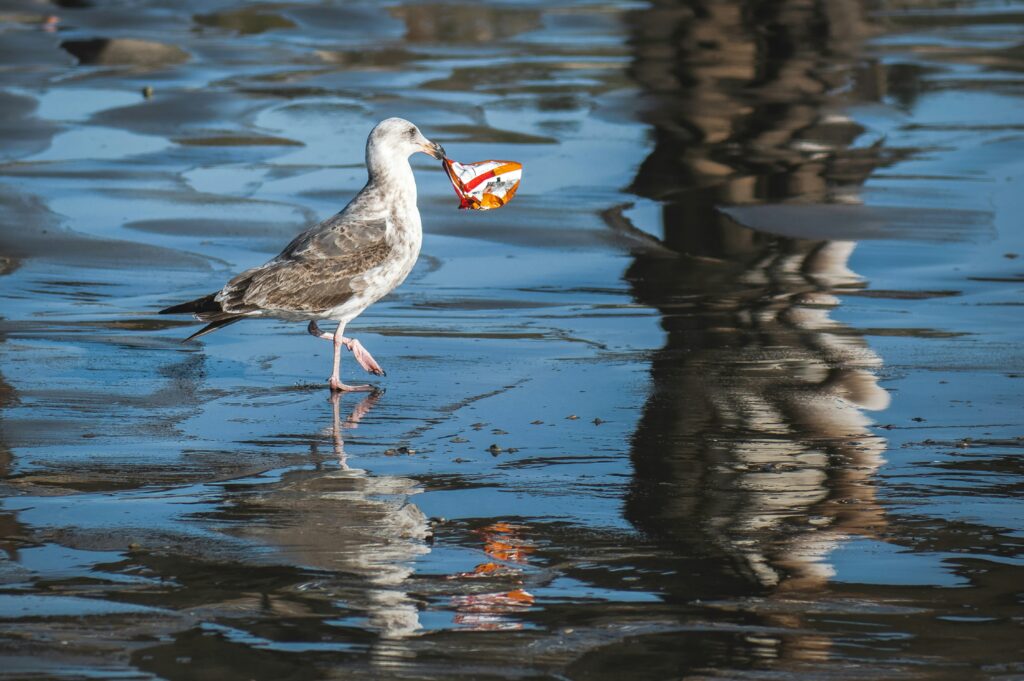
Photo by Matthew Mentley on Unsplash
Liddie the Seal
I remember taking my kids to see Happy Feet, a wonderful animated movie about an emperor penguin named Mumble whose talent was dancing – which was a problem when all the other male penguins sang to attract mates. There’s a beautiful message in the movie about finding and valuing yourself even if you dance to a different beat. There’s also a strong environmental message as the animals struggle with scarce fish, pollution, and the presence of people. In fact, one of the most compelling moments for me (other than when my three year old daughter screamed when the leopard seal lunged toward the audience!) was seeing Lovelace, a rockhopper penguin, who had a plastic ring from a six-pack stuck around his neck. I was horrified and spent the rest of the movie worrying about him (spoiler: it comes off and just in time, it was slowly strangling him). From that day forward, I obsessively cut the plastic from cans so that there are no enclosed holes and I actively look for products that use compostable rings or connectors. There’ll be no strangled Lovelaces because of me!
So when I heard the story of Liddie, a northern elephant seal with a ring from the lid of a plastic bucket around her neck, I instantly thought back to Lovelace in horror. Oh no! A real-life Lovelace being strangled by human trash! The blog post from The Marine Mammal Center in Sausalito, CA documents the discovery of a northern elephant seal in 2024 on the beach near Vandenberg Space Force Base in Central California with the ring from the lid of a plastic bucket around her neck. Researchers from the Center, who were near the remote site studying elephant seal pups, noted the seal’s thin condition as well as the tightness of the ring around her neck. After receiving permission to access the beach (by rappelling!) and treat the seal, the researchers, including a veterinarian, were able to sedate the seal, nicknamed “Liddie”, and remove the ring. They treated the wound and monitored Liddie as she recovered. Eventually, Liddie made her way to the ocean, free of the painful plastic that had been limiting her food intake and slowly strangling her. I haven’t seen any updates about Liddie, that would be unlikely since she wasn’t implanted with a tracking device, but I imagine her living a good life, free of pain, able to hunt and eat like normal, swimming joyfully in a bountiful, healthy ocean.
Hmmm. While I like to imagine Liddie happily swimming in the ocean, thinking about the reason for her rescue gives me pause, with a little black cloud developing over my happily-ever-after ending. After all, it was human trash that caused Liddie such pain and endangered her life. And that trash is still there, growing ever larger as it poisons the ocean and imperils the wildlife who live there.
Types and Risks of Ocean Trash
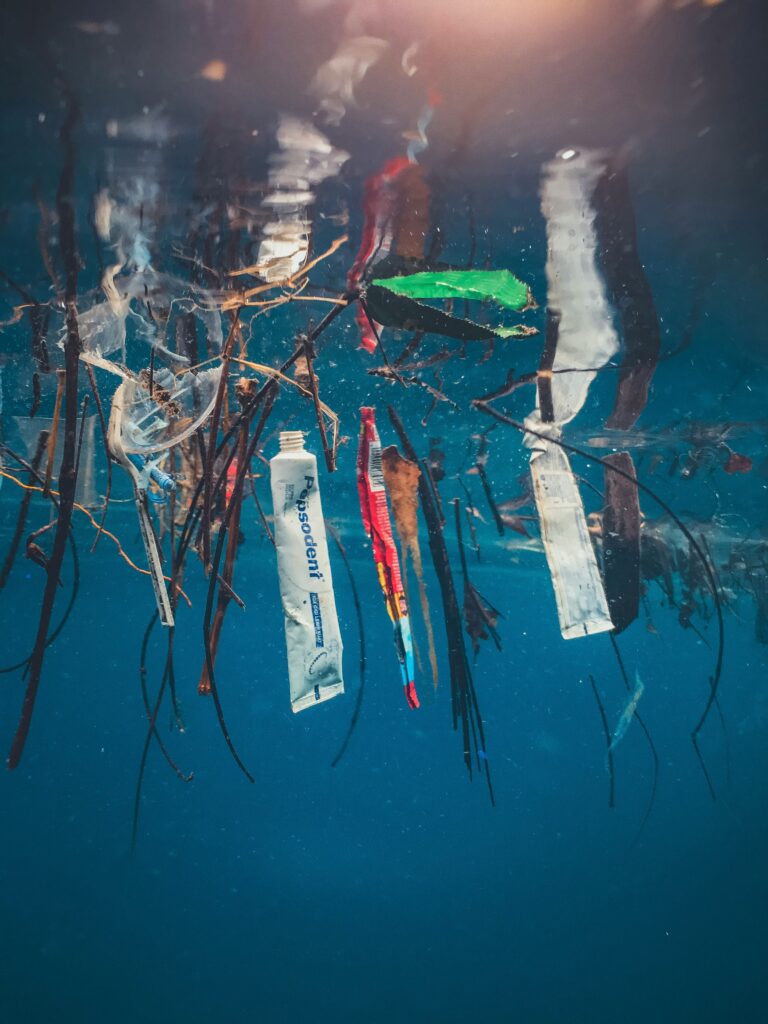
According to The Marine Mammal Center, ocean trash is “a general term for all the human-created debris that makes its way into the ocean from a variety of methods”. About 90% of ocean trash is plastic (The Marine Mammal Center). This plastic can be “whole” items made of plastic, which doesn’t biodegrade or at least doesn’t biodegrade well, like single-use plastic bottles, plastic shopping bags, food wrappers, straws, household items, toys, and, in the case of Liddie, 5 gallon plastic buckets and lids. Marine wildlife can be injured by plastic items in the ocean, such as cuts and abrasions, entanglements like Liddie and Lovelace, and poisoned or injured by consuming plastics that look like food items.
Plastic in the ocean can also be in the form of microplastic, plastic that has slowly disintegrated into smaller and smaller pieces due to sunlight and wave action. Since plastic doesn’t biodegrade, that is, it is not subject to the natural process of breaking into simpler, non-harmful, naturally occurring substances by living organisms, these tiny pieces of plastic can stay in the environment for many hundreds or thousands of years. Microplastics are not just a marine issue; they are everywhere, from mountains to rainforests, from oceans and rivers, and even in the bodies of marine and terrestrial animals, including humans. They’ve even been found in human breastmilk. Marine wildlife ingest microplastics, which accumulate over time with species higher up the food web accumulating greater amounts. The gastrointestinal systems of marine wildlife can fill up with microplastics, which can also cause abrasions and other physical damage. In addition, as microplastics degrade in the body, harmful chemicals are released, potentially disrupting systems such as the endocrine system. Scientists are concerned that reproductive systems can be affected with lower birthrates and higher infant mortality. Research is still being conducted on the harmful effects of microplastics on human and non-human animal health but, no doubt, the news won’t be good.
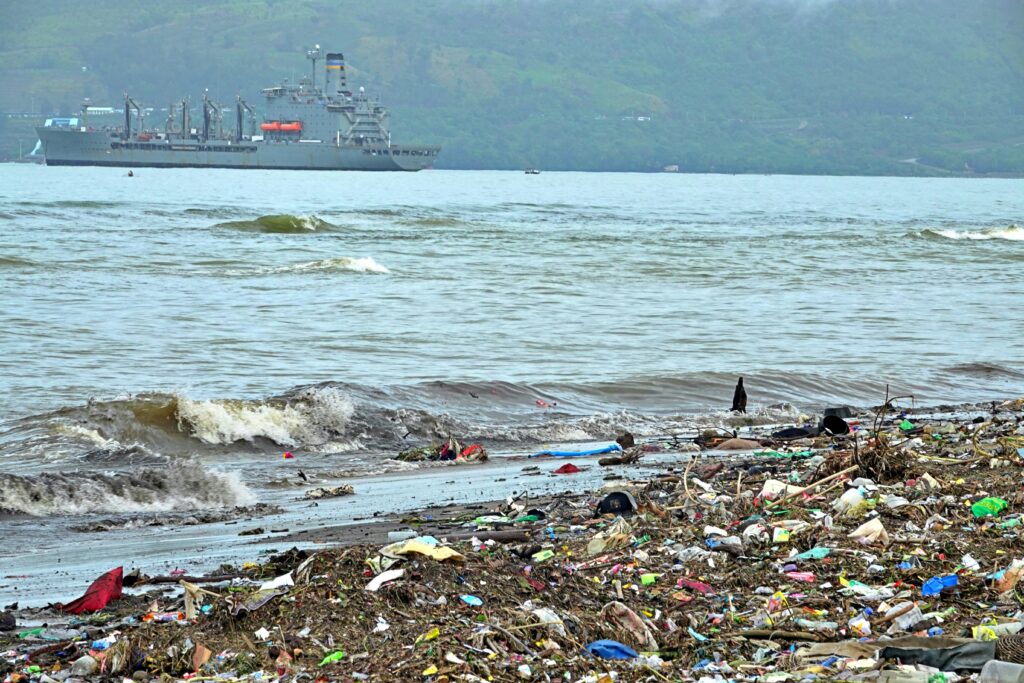
The Marine Mammal Center has a third category of ocean trash – fishing gear. Marine wildlife can become entangled in fishing gear, such as nets and lines, as well as injured. Who can forget the haunting images of whales trailing nets and ropes, their fins or tails hung with heavy lines, desperately trying to rid themselves of these life-threatening impediments that limited their mobility and ability to feed and surface to breathe?
Let’s not forget about other forms of ocean pollution, such as chemicals, oil, and sewage.
I’ll explore ocean pollution, plastics, and microplastics in marine ecosystems, and the effects on marine wildlife in more detail in future blog posts.
Reduce Plastic Use to Save Our Oceans and Marine Wildlife
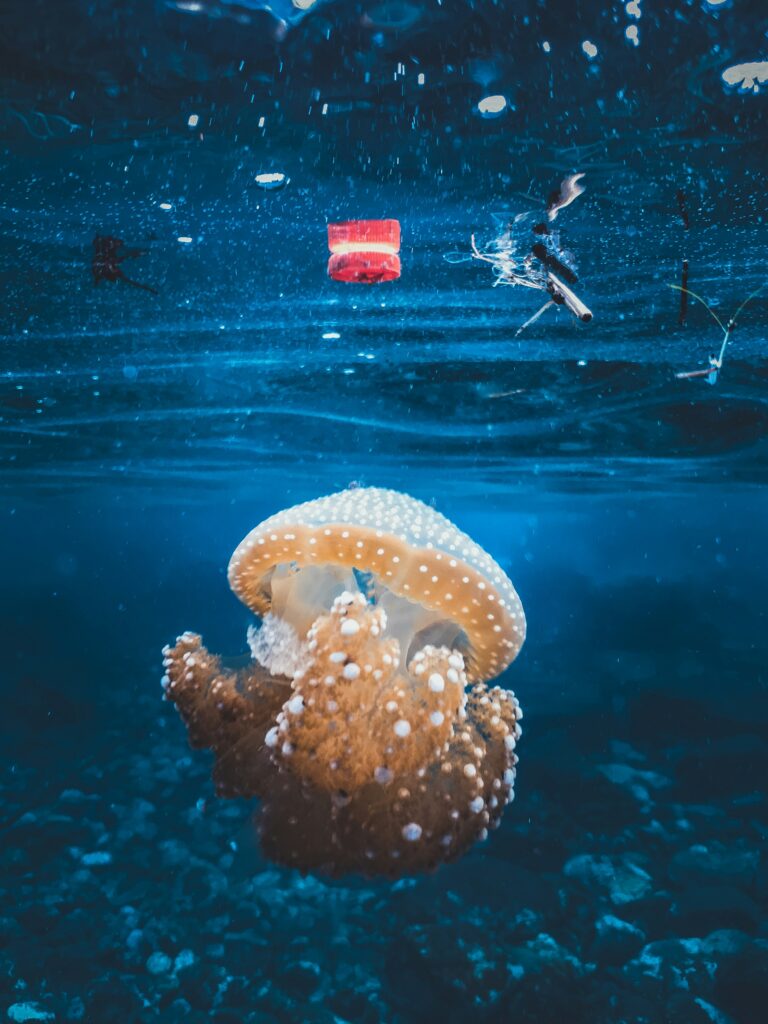
It’s clear that plastic is a danger to our oceans and the wildlife who live in them – as well as to us. It’s also clear that that danger comes from us, the humans who created, use, and dispose of plastic. So it’s up to us to do something about it. But let’s be honest – it can be pretty overwhelming to think about this enormous problem and what we, individual people, can do about it. After all, it’s just not realistic to eliminate all plastic in one fell swoop. So instead of trying to solve the whole terrible mess, let’s start by focusing on what we each can do in our own day-to-day lives. Larger efforts to clean ocean pollution and help marine wildlife as well as global, national, and community policies to reduce plastic use are desperately needed – but for now, I am trying to focus on just a few things I can do in my daily life to reduce my plastic use. If you can pick just one thing to work on, then do it! After awhile, as you adjust to new habits, pick another thing. I really believe that, over time, our small, individual efforts will add up to something bigger and help make a positive change in the world. We’re thinking of you, Liddie and Lovelace!
Here’s a list of 10 things you can try with your family to reduce plastic use:
- Eliminate plastic grocery store bags and switch to reusable, cloth (which is washable) grocery store bags. Keep them in all your cars and have a variety of sizes at hand. Make sure you wash them regularly.
- I was looking at my reusable bags the other day and realized the insulated bags have plastic in them. I have used them for many years so avoided using a lot of plastic bags but now that it’s time to replace them, I am going to look for all-fabric options.
- Similar to #1, eliminate grocery store produce bags and switch to small, reusable, cloth bags – or ditch the bags entirely! Buy a pack of different sizes and wash regularly.
- I have a pack of bags of different sizes which works well in the produce department. I must admit, I often loose them in the bottom of the last shopping bag so sometimes I resort to tossing the produce into my cart without a bag. Now, this doesn’t work with cherries or string beans so I have had to use the plastic produce bags. But for larger items, ears of corn, tomatoes, broccoli, it’s been fine, they really don’t need bags. You might be grimacing, thinking about the produce touching the not clean cart, I did too. But honestly, someone else has touched that produce already, many someones. Just wash it all at home, it’s fine. And figure out a system for your little, cloth produce bags so you can always find them (mine are now in a smaller cloth shopping bag which goes on top of all the other bags mashed into the largest bag).
- Avoid single-use plastics like water bottles and instead buy a nice water bottle for yourself (ideally stainless steel but even a BPA-free plastic bottle works).
- Sometimes your favorite drinks come in plastic bottles so maybe you aren’t ready to change drinks. But water is readily available (for most people in the US anyway!) so use a reusable bottle. If you have to buy water, buy gallon jugs or larger and refill from those, at least you are using fewer plastic bottles.
- You can bring your own reusable cups for coffee, tea, soda, and other drinks. Self-serve beverage stations are ideal for this but even some cafes and restaurants are back to allowing use of reusable cups (this practice was restricted during covid).
- Ditch the plastic straws and bring your own reusable one.
- This is a pet peeve of mine ever since I saw a documentary that revealed the millions and millions of plastic straws washing up on Pacific Ocean beaches. I now carry a set of metal straws in my pocketbook and car. I have to admit, I’ve become a little lax with this when purchasing drinks in some communities that have enacted stricter plastic use regulations. The straws are now a (supposedly) biodegradable plastic-type material or paper. But I’ve recently gone back to using my metal straws; why use any plastic when I can just re-use my metal straws?
- Replace plastic resealable bags with reusable plastic bags or containers, metal containers, or paper or waxed paper bags. Sandwiches for school lunches really do stay fresh in these containers and bags, even the paper ones.
- Similarly, store food in glass containers and avoid plastic storage containers. At least the plastic containers will be reused but eventually you will need to toss them. While many municipalities will accept all plastic food containers for recycling, some of these are made of 3, 6, 7, and black plastic, all of which are more difficult to recycle. They can be more toxic to produce and use too. The black plastic containers are popular for take out and leftovers going home so, if you are offered them at a restaurant, ask for a paper-based product or bring glass containers from home for leftovers.
- Buy larger sizes. If you are buying products that come packaged in plastic, like laundry detergent, buy a large size so you use fewer plastic containers.
- Look for glass, metal, or paper packaging, all materials that can be recycled more easily and safely than plastic.
- I use chapstick multiple times a day. I switched to natural chapsticks, like Burt Bee’s, a long time ago to avoid the petrolatum found in commonly available chapstick products. But the tube is still plastic and I go through a number of them in a year. I recently learned that Burt’s offers a chapstick in a paper tube so I am going to look for that.
- Better yet, skip the packaging all together! There are many products on the market now that come in solid bars, tablets, sheets, and more, with little or no packaging. For example, instead of laundry detergent in a plastic container, buy detergent in a sheet or tablet. Shampoo can also be found in tablet form. Go back to bar soap and eliminate all those plastic liquid soap containers. Many of these products come in minimal paper packaging or none at all.
- I admit, that last one is a hard one for me. Bar soaps are hard on my hands, my skin tends to react to them, so I prefer to use foaming soaps. But, while researching for this post, I’ve come across some products that look like good options for me so I will try bar soaps again – one sink at a time!
- Look for natural materials like cotton, wool, linen, bamboo, etc. for clothing, blankets, sheets, decorative pillows, rugs, and curtains. Yes, they can be more expensive but they usually last longer. And have fewer or no chemicals, little to no outgassing, and are biodegradable.
- A friend of mine has a small business making made-to-order clothing out of linen and natural dyes. Leah does beautiful work, check out Charlie Darwin Textiles.
Let’s connect!
How have you reduced your plastic use? What suggestions do you have that others could try? Please share below!
Resources:
Ocean Pollution including Plastics in the Ocean
https://oceanservice.noaa.gov/hazards/marinedebris/plastics-in-the-ocean.html
https://www.sas.org.uk/plastic-pollution/plastic-pollution-facts-figures
https://www.worldwildlife.org/our-work/sustainability/plastics
Marine Wildlife Entanglements
https://marinesanctuary.org/blog/what-to-do-when-you-see-an-entangled-marine-animal/
https://coastalstudies.org/our-work/marine-animal-entanglement-rescue/
Reducing Plastic Use
https://www.epa.gov/plastics/what-you-can-do-reduce-plastic-waste
https://ecocycle.org/eco-living/refuse-and-reduce/how-to-reduce-plastic/
https://www.nrdc.org/stories/10-ways-reduce-plastic-pollution
https://www.oceanicsociety.org/resources/7-ways-to-reduce-ocean-plastic-pollution-today